On this page
If birds spend a lot of time eating, waiting and perching in one small area, droppings naturally accumulate there. A feeder hanging above a deck rail, patio or favorite perch can make the buildup especially obvious.
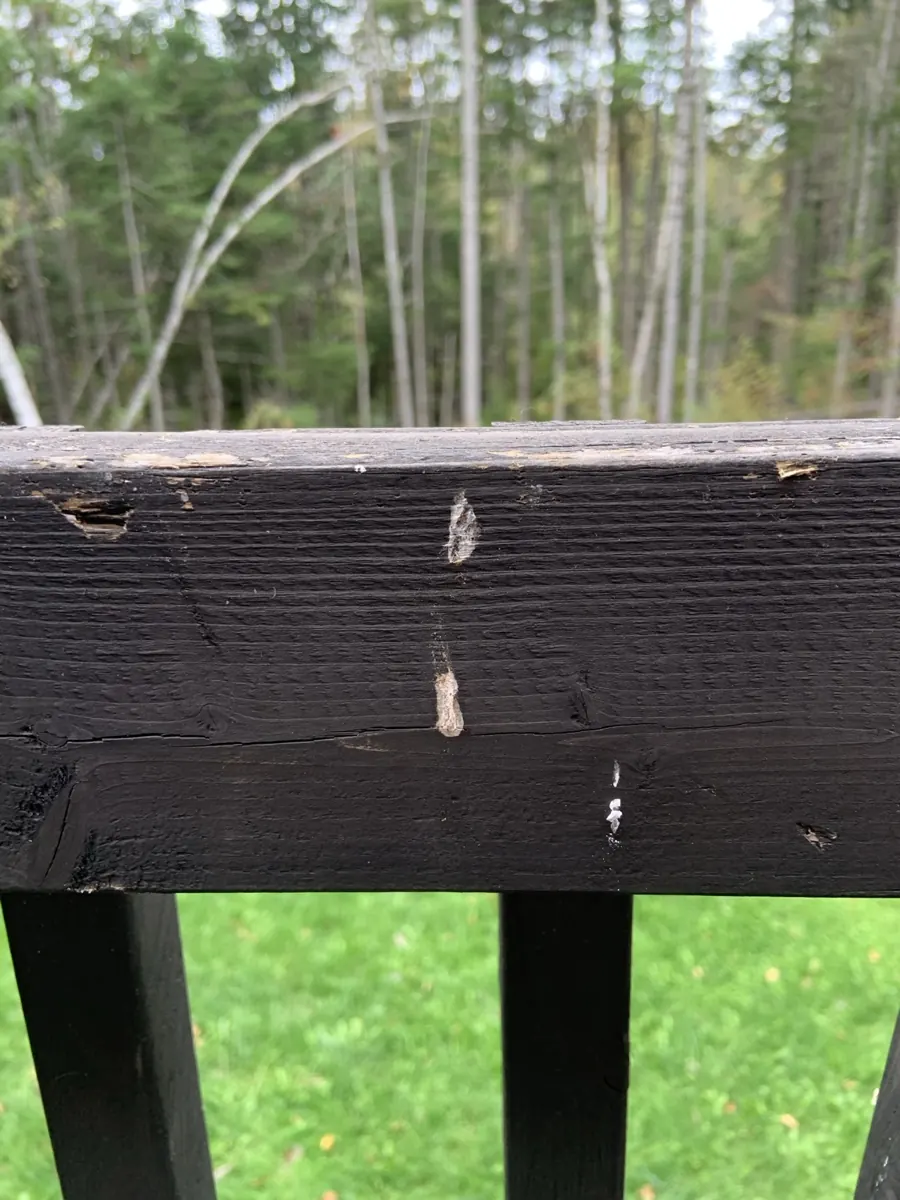
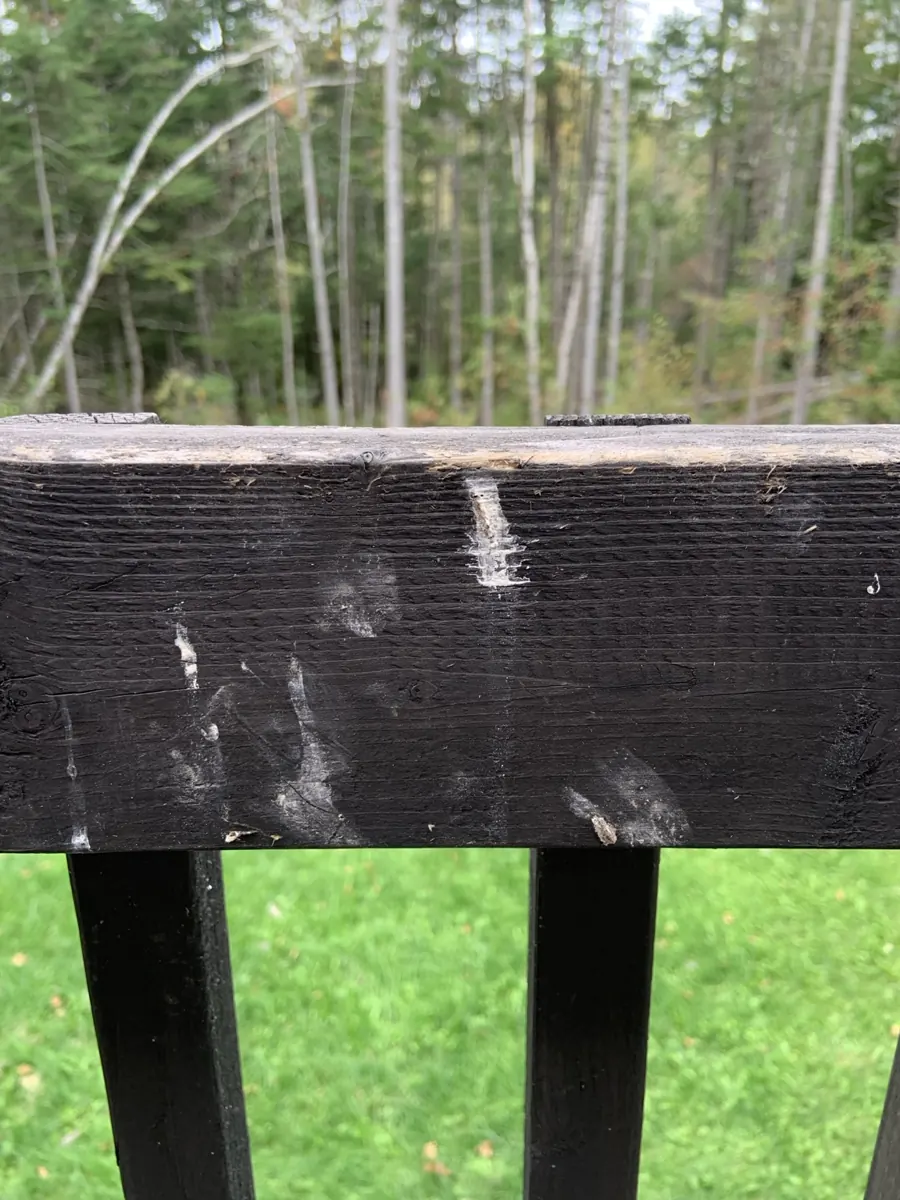
Our feeder hangs beside a deck that birds use as a staging area. The white marks on the railing in the photo are the kind of mess that can appear quickly when a feeding station becomes busy. Seeing droppings tells us it is time to clean the feeding area—not that the birds are doing anything unusual.
Why does so much bird poop collect near a feeder?
Feeders concentrate activity. Birds may land on nearby rails or branches before approaching, wait while another bird feeds, eat on the feeder itself, then return to the same perch. More birds spending more time in one location means more droppings in that location.
Is bird poop around a feeder a problem?
A few droppings are expected. The concern is persistent accumulation where feces can mix with seed, hulls, moisture and feeding surfaces. Project FeederWatch notes that some pathogens can spread indirectly through droppings and recommends regular cleaning of feeders and the surrounding area.
Tray and platform-style feeding surfaces deserve particular attention because food and droppings can come into contact.
How often should you clean the area?
Do not wait for a calendar date if the mess is obvious. Sweep or remove droppings and seed debris when they accumulate, especially on surfaces directly below or beside the feeder. For the feeder itself, current Project FeederWatch guidance suggests regular cleaning about every week or two, more often during heavy use or wet weather.
How can you reduce the mess?
- Move the feeder away from high-use deck furniture or doorways if practical.
- Clean favorite perches before buildup becomes heavy.
- Keep seed trays and feeding surfaces free of droppings.
- Rake or sweep discarded hulls and seed below the feeder.
- Consider more than one feeding location if birds are heavily concentrated.
- Do not allow wet seed and droppings to accumulate together.
Does lots of poop mean lots of birds?
Often it simply reflects traffic and repeated use of the same perch, but droppings alone cannot tell you exactly how many birds are visiting. If you are curious, count the highest number of individual birds you can see at one time rather than trying to infer flock size from the mess.
What if you see a sick bird?
Fluffed feathers, lethargy, crusty eyes or abnormal growths can be signs that a bird is unwell. Project FeederWatch recommends extra cleaning and considering temporary feeder removal when sick birds appear. A licensed wildlife rehabilitator or veterinarian is the appropriate source for care of an injured or sick wild bird.
Sources & further reading
- Cornell Lab of Ornithology — How to Clean Your Bird Feeder
- Project FeederWatch — How To Clean Your Feeders
- Cornell Lab of Ornithology — How to Choose the Right Kind of Bird Feeder
Frequently asked questions
Is bird poop under a feeder normal?
Yes. Feeders concentrate bird activity, so some droppings around nearby perches and below the feeder are expected.
Can bird droppings spread disease at feeders?
Some bird diseases can spread indirectly through contaminated droppings, which is why regular feeder and feeding-area hygiene matters.
Should I move a messy bird feeder?
Moving it can help if droppings are collecting on a deck, furniture or other high-use area. Choose a location that is still safe for birds and practical to clean.