On this page
Bird droppings on a feeder are more than a cosmetic nuisance when they can contact seed, trays, ports or perches. The safest approach is to empty the feeder, remove visible debris, wash it thoroughly, rinse it and let it dry completely before fresh seed goes back in.
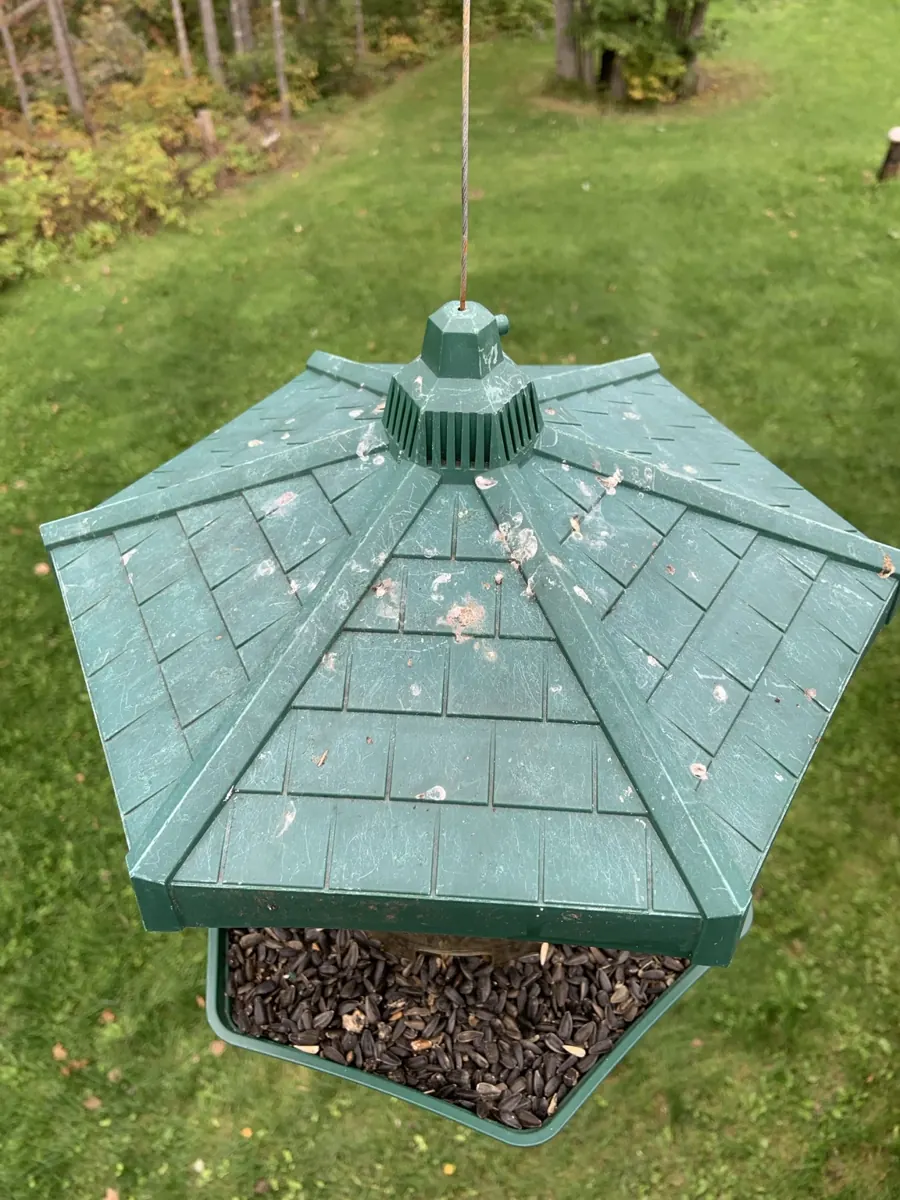
The feeder roof in our photo had visible dried droppings after a busy period. That kind of obvious buildup is a useful cue to clean rather than simply adding more seed and ignoring the outside surfaces.
How to clean bird poop off a seed feeder
- Take the feeder down and empty all seed.
- Disassemble removable trays, ports or panels if the feeder allows it.
- Scrub away visible droppings, hulls and stuck-on debris.
- Wash thoroughly with warm water and dish soap.
- For disinfection when appropriate, follow current Project FeederWatch/Cornell guidance for the feeder material; a dilute bleach solution can be used after debris is removed.
- Rinse thoroughly.
- Allow every part to dry completely before adding fresh seed.
- Clean the ground, deck or tray beneath the feeder as well.
Do you need bleach every time?
Project FeederWatch's current general guidance emphasizes thorough washing with warm water and dish soap and notes that disinfection may be useful during heavy use or when sick birds are observed. Cornell also describes a dilute bleach solution—no stronger than one part bleach to nine parts water—as an effective option. Always rinse thoroughly and allow the feeder to dry before refilling.
How often should a bird feeder be cleaned?
A useful baseline is every week or two, with more frequent cleaning during heavy use, wet weather or when contamination is obvious. Your eyes matter more than the calendar: visible feces, damp seed, mold or accumulated debris are reasons to act sooner.
What should you do with the old seed?
Do not return seed that is wet, moldy, heavily soiled or mixed with droppings. Discard it. Fresh-looking dry seed that was removed before cleaning should still be handled carefully; if there is any concern about contamination, replacing it is the safer choice.
Don't forget the area below the feeder
Cleaning the feeder while leaving a thick layer of hulls, spoiled seed and droppings directly below it only solves half the problem. Sweep a deck or patio and rake ground debris regularly. If your feeding station is creating a concentrated mess, our guide to why bird poop builds up around feeders covers ways to reduce it.
If a sick bird appears
Increase cleaning and follow local wildlife-health guidance. Project FeederWatch recommends considering temporary feeder removal to help disperse birds when illness is observed, alongside disease-specific precautions. Do not attempt to diagnose or treat wild birds yourself.
Sources & further reading
- Cornell Lab of Ornithology — How to Clean Your Bird Feeder
- Project FeederWatch — How To Clean Your Feeders
- Cornell Lab of Ornithology — How to Choose the Right Kind of Bird Feeder
Frequently asked questions
Can I just wipe bird poop off my feeder?
A quick wipe may remove a small spot, but a feeder with visible buildup should be emptied and thoroughly washed so debris is removed from feeding surfaces, seams and trays.
How often should I wash my bird feeder?
Project FeederWatch recommends regular cleaning about every week or two and more often during heavy use or wet weather.
Can I refill a bird feeder while it is still wet?
It is better to let the feeder dry completely. Moisture can contribute to mold and spoilage in seed.