On this page
- Why raccoons keep coming back to bird feeders
- The first thing I would do tonight
- Use a raccoon baffle and isolate the pole
- Do not grease the feeder pole
- Reduce the amount of seed hitting the ground
- What the paw prints in our yard told us
- Will removing the feeder at night hurt the birds?
- A practical raccoon-proofing checklist
- Sources
Why raccoons keep coming back to bird feeders
Raccoons are excellent climbers, curious problem-solvers and opportunistic eaters. A feeder gives them exactly what rewards repeat visits: concentrated, calorie-dense food in a predictable location. Once a raccoon finds seed, suet or peanuts, it can learn that your feeding station is worth checking again.
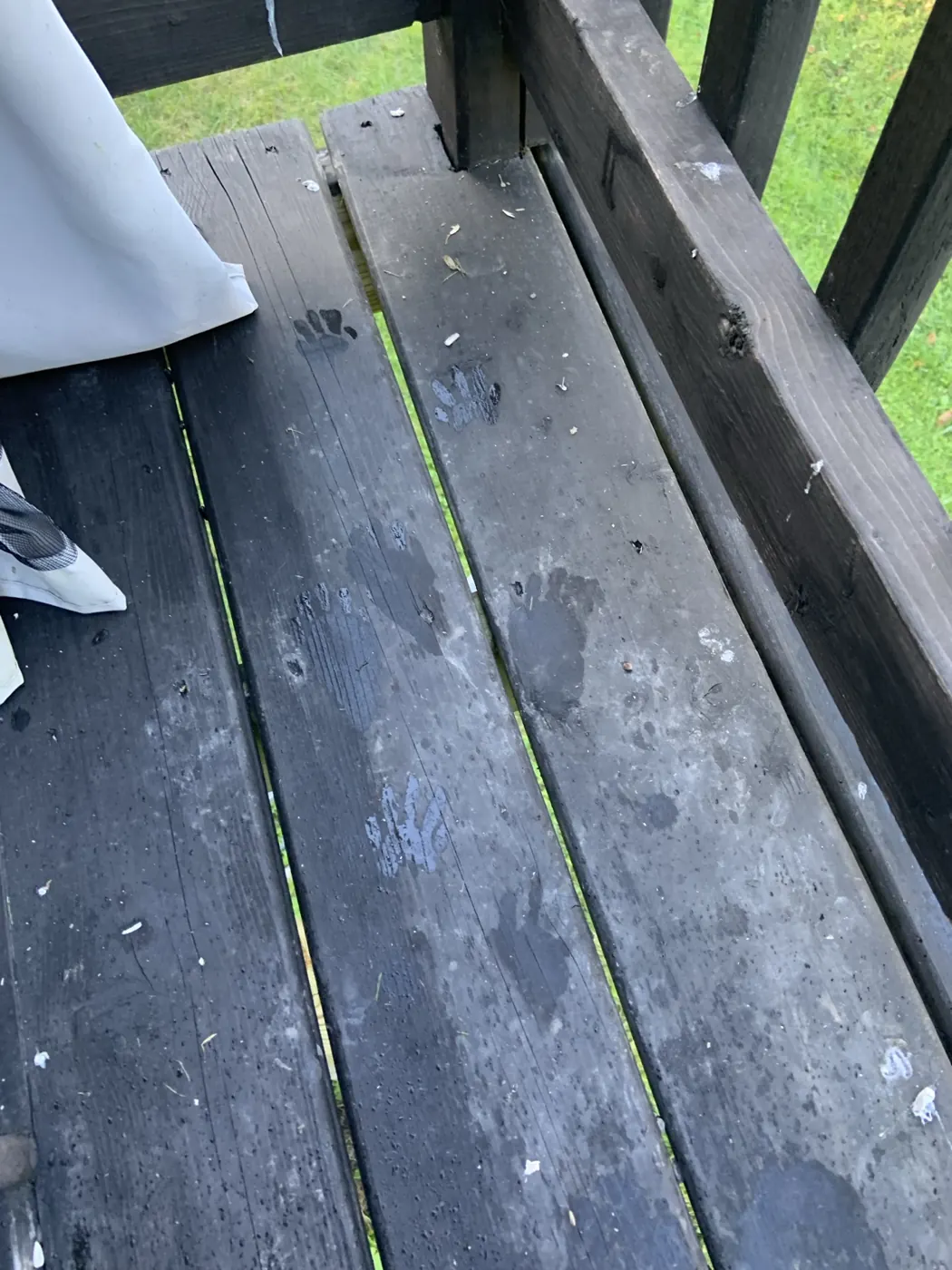
That is why the most useful strategy is not trying to frighten one animal once. It is removing the reward and making access physically difficult. In our own backyard, wet paw prints appeared across the deck close to the feeding area after nighttime visits. Those tracks were the clue that the overnight visitor was not a bird.
If you are not sure what is visiting, start with What Is Eating My Bird Seed at Night?. That guide helps separate raccoons from squirrels, rodents and other possibilities.
The first thing I would do tonight
Bring the feeder in before dark for several nights. Humane World for Animals calls nighttime feeder removal the simplest solution when raccoons are eating from bird feeders. It breaks the easy food routine without harming the animal.
Also clean up spilled seed beneath the feeder and remove other nighttime food sources you control. A feeder can be inaccessible while a pile of sunflower seed underneath still provides a reward. If birds are throwing a lot of seed, see why birds throw seed out of feeders.
Store spare birdseed securely rather than leaving bags on a porch or deck. A tight container prevents a second food source from undermining the work you did on the feeder itself.
Use a raccoon baffle and isolate the pole
A properly positioned stovepipe-style raccoon guard can make a major difference. Humane World recommends a guard at least 24 inches long with the bottom of the baffle at least four feet above the ground. The exact setup matters because a baffle that is too low can simply become another climbing step.
Placement matters just as much. A perfect pole guard does little if the feeder hangs beside a deck railing, fence, tree trunk or branch that gives a raccoon a different route. Think in three dimensions: could an animal climb beside it, reach across, or jump onto it?
If the feeder is hanging from a wire, keep the route isolated from structures that can serve as launch points. The goal is not to make your yard hostile; it is to make the seed inaccessible to a capable climber while remaining accessible to birds.
Do not grease the feeder pole
Greasing a pole sounds clever, but it is one shortcut we would skip. Humane World specifically warns against grease because it can get onto birds' feathers. Birds depend on healthy feather condition for insulation and flight, and grease is not something we want transferring from a feeder setup to wildlife.
Physical exclusion—a correctly installed baffle, suitable pole and better placement—is a cleaner long-term solution than sticky or slippery substances.
Reduce the amount of seed hitting the ground
Raccoon-proofing is easier when the feeder area is not broadcasting food below it. Use a seed tray where appropriate, offer seed birds actually eat, and sweep or rake heavy accumulations. If your seed is sprouting below the feeder, our guide to bird seed sprouting under feeders covers the cleanup side.
Do not overfill simply because the feeder empties quickly. First work out whether birds are eating the food, throwing it, or a mammal is taking it. Why Is My Bird Feeder Emptying So Fast? walks through that diagnosis.
What the paw prints in our yard told us
The photographs on this page came from our own deck. After a nighttime visit to the feeder area, several small hand-like wet prints were visible across the boards. The five long toes and hand-shaped appearance are consistent with raccoon tracks. We use that observation as backyard context, not as a substitute for wildlife identification in every region.
What mattered practically was the timing: the evidence appeared when the familiar daytime feeder birds were not active. That is a useful reminder to look around the feeder itself. Tracks, tipped trays, moved lids, spilled seed and the time damage occurs can tell you more than staring at the feeder during daylight.
Will removing the feeder at night hurt the birds?
For the familiar seed-eating birds most people see at North American backyard feeders, taking a feeder in after evening activity and returning it in the morning does not remove their normal overnight meal. Most of those birds are not feeding from your seed feeder through the middle of the night. Our article Do Birds Eat at Bird Feeders at Night, or Do They Sleep? explains the distinction.
Put the feeder back out early enough for morning activity and keep the routine consistent while you solve the mammal problem.
A practical raccoon-proofing checklist
Start simple: bring feeders in at night, clean up spilled seed, secure stored seed, and remove easy climbing routes. If you want the feeder to remain out, add a correctly sized and positioned raccoon guard and inspect the whole approach path rather than only the pole.
Then watch for a week. If seed loss stops and tracks disappear, you have useful evidence that the changes worked. If the problem continues, reassess access points. Raccoons are capable climbers, so a branch, railing or nearby structure you dismissed may be the route.
A good solution lets you keep feeding birds without turning the feeding station into an easy nighttime buffet for mammals.
Sources & further reading
We use established bird-science and wildlife organizations for biological and wildlife-safety guidance. The observations described above are firsthand backyard observations; they are not presented as proof of a single cause.