On this page
- Changing a feeder does not erase the yard
- What happened in our backyard
- Keep other variables familiar
- Feeder design changes access
- Why birds watch instead of landing
- Should the old feeder overlap?
- Keep food familiar
- How long to wait
- When visits really can decline
- A simple transition plan
- Common questions
- Sources
Changing a feeder does not erase your backyard from a bird's map
If you replace a familiar feeder and the birds seem to vanish, it is easy to assume you ruined a good thing. In most cases, the more useful explanation is that you changed one part of a feeding location the birds had learned. They may still know the yard, trees, escape routes and general food location while treating the new object with more caution.
Birds also differ enormously in how readily they approach feeders. A bold Blue Jay may investigate quickly while another individual or species hangs back. The new feeder can also physically favor a different set of birds. Cornell Lab’s feeder guide explains that platform, hopper, tube, window and suet feeders accommodate different feeding styles and species.
So there are two separate questions: Will the birds remember the feeding area? and Can or will they use this particular new feeder? Those are not the same problem.
What happened when we changed our own feeder
We recently had to make this exact change. Our old feeder was the green feeder shown below: a traditional hopper-style setup with a broad tray around the base. We replaced it with the brown feeder in the second photo, which looks noticeably different.
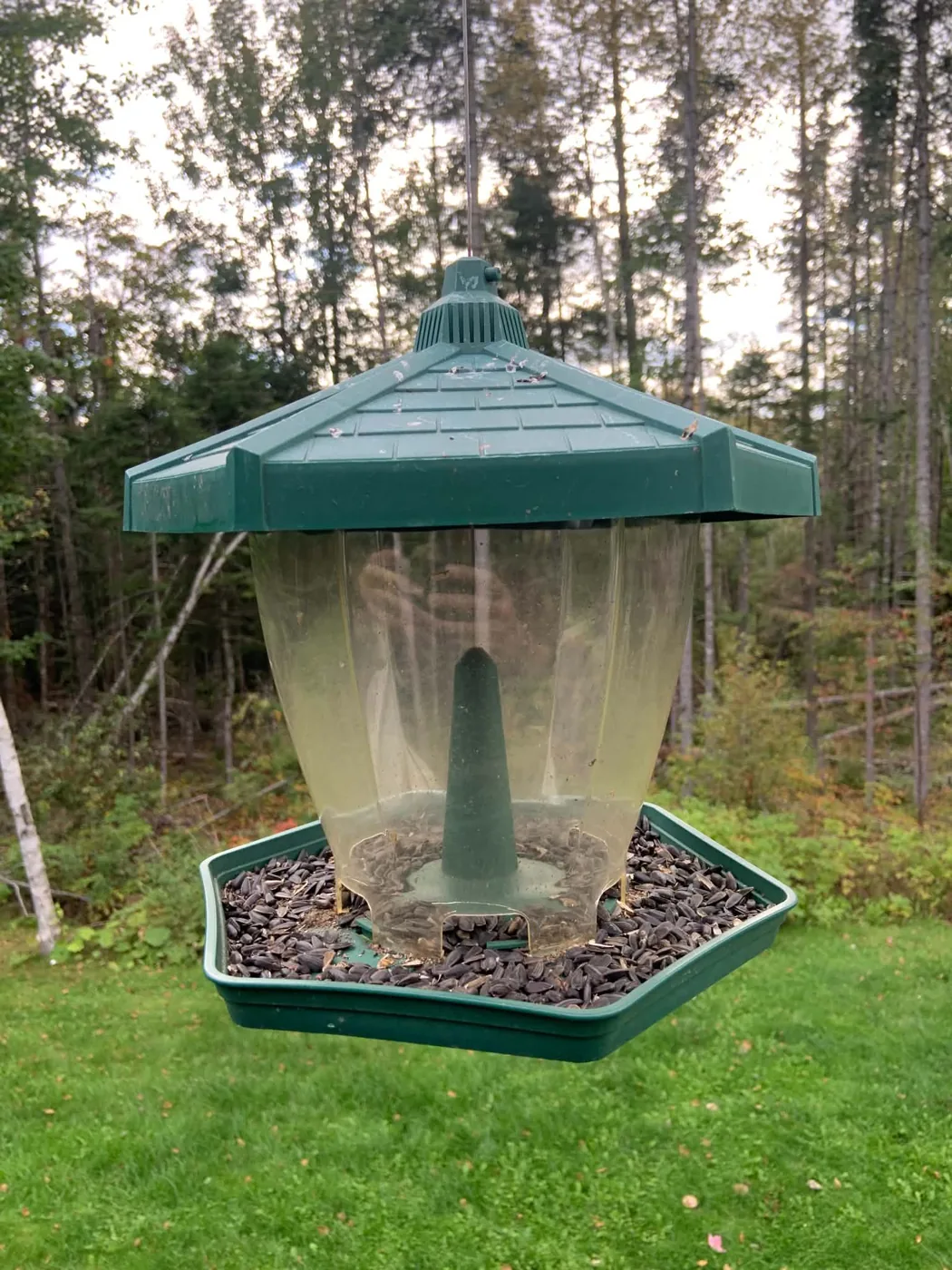
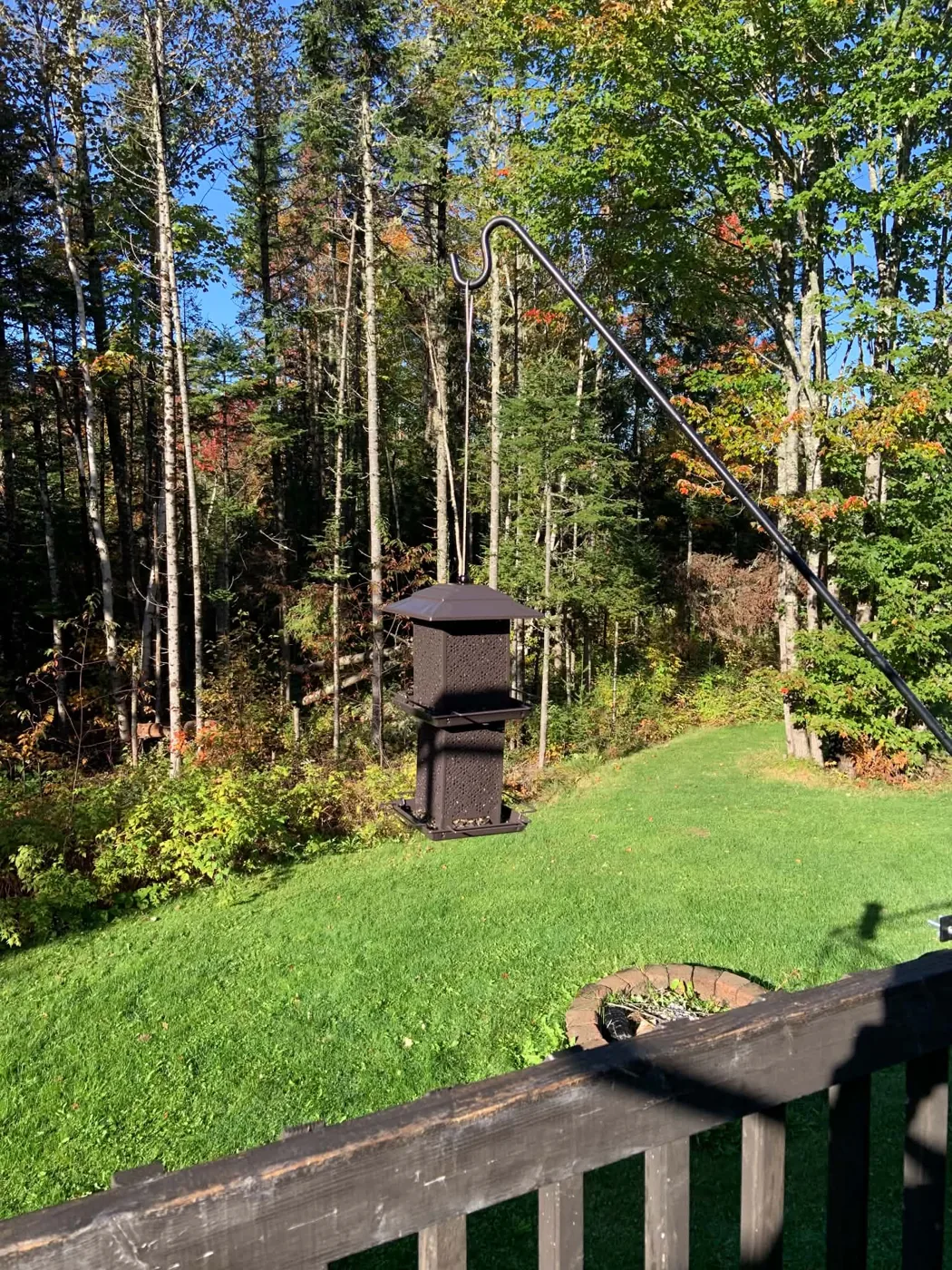
The encouraging part was how quickly at least some of our regulars adjusted: the Blue Jays came back to the new feeder the same day we put it up. We did not run a controlled experiment, and we would not turn one backyard observation into a promise that every bird will return within hours. But it is a useful real-world example of why a feeder change does not necessarily reset everything to zero.
The birds had already been using the area. The yard, surrounding trees and general feeding location were familiar. That is very different from putting a feeder in a place where local birds have never found food before.
The more things you keep the same, the easier the change is to interpret
If possible, change one major variable at a time. Put the new feeder near the old location and begin with a familiar food. If birds return, you know they accepted the feeder without also having to rediscover a new corner of the yard or a new seed.
If you simultaneously replace the feeder, move it 30 feet, switch from sunflower to an unfamiliar mix and remove nearby cover, you have changed four things. If visits decline, you will not know which one mattered.
This is also why our article about how long birds take to find a new feeder addresses a slightly different situation. A truly new feeding station has to be discovered. A replacement feeder at an established feeding site may already sit inside the birds’ known routine.
Feeder design can change which birds can comfortably use it
A replacement is not automatically equivalent just because both objects hold seed. Cornell notes that platform feeders attract a particularly broad variety of seed-eating birds, including jays, doves, sparrows, juncos and others. Tube feeders favor birds that can use smaller perches or cling easily. Cages and weight-sensitive designs may deliberately restrict larger visitors.
Look at the new feeder from the bird's perspective. Is the landing area smaller? Are the perches shorter? Does the feeder swing more? Is seed hidden behind mesh? Is a protective cage blocking a larger bird? Did you replace an open tray with a narrow tube?
If Blue Jays used the old feeder but not the new one, the issue might be access rather than memory. Our Blue Jay peanut article shows how readily these birds can turn a feeder into a pickup point when the food and design suit them.
Why birds sometimes sit nearby instead of landing
A bird perched in a nearby tree watching the new feeder is actually giving you useful information: it has found the setup. It may be checking safety, waiting for another bird to go first, or deciding how to approach an unfamiliar shape.
Do not immediately move the feeder because a bird spends ten minutes observing it. Our guide to birds sitting near a feeder but not eating covers several reasons birds pause even when they know food is present.
New objects can matter because wild birds survive by being attentive. Caution around a changed object is not stupidity or rejection; it can be sensible risk management.
Should you leave the old feeder up beside the new one?
If the old feeder is still safe and usable, a short overlap can sometimes make the transition easier and give you a direct comparison. But this is not mandatory, and in our case the Blue Jays demonstrated that an immediate switch can work too.
If you do overlap them, keep the experiment simple. Use similar food in both and watch which species choose which design. You may discover that the “new feeder problem” is really a species-preference problem.
Do not keep a damaged, difficult-to-clean or unsafe feeder operating merely because birds are familiar with it. Familiarity is not more important than sanitation or physical safety.
Keep the food familiar at first
When troubleshooting a feeder change, familiar food removes one variable. If your birds were regularly eating black-oil sunflower, putting the same food in the replacement lets you evaluate the feeder itself.
Cornell calls sunflower the mainstay of many backyard feeding stations because it attracts a wide range of species. If birds suddenly ignore a replacement feeder containing an entirely different mix, you cannot confidently blame the feeder.
If the food itself seems to be the problem, see why birds won't eat bird seed. Stale, wet or low-preference ingredients can produce a quiet feeder even when the hardware is fine.
How long should you wait before changing things again?
There is no universal countdown. Same-day acceptance happens—we saw it with our Blue Jays—but other birds may take days or longer. Weather, season, natural food, predator activity and the degree of change all affect what you see.
Unless there is a safety or spoilage issue, give the feeder enough stability to learn something. If you move it every morning because yesterday was quiet, you keep creating a new situation.
Watch for intermediate signs: birds landing nearby, eating spilled seed underneath, briefly touching the feeder, or one species using it while another stays away. Those clues are more informative than a simple yes/no count.
When a feeder change really can reduce visits
A decline may persist when the new feeder is genuinely less suitable. A large dove may not use tiny perches. A Blue Jay may struggle with a cage intended to exclude large birds. A bird accustomed to an open platform may be reluctant or physically unable to feed through narrow ports.
Placement matters too. If “changing the feeder” also meant moving it close to a busy door, exposed window, predator hiding place or other disturbance, the location may be responsible.
And sometimes the timing is coincidence. Natural food can become abundant, a hawk can appear, migration can change the local mix, or cold weather can suddenly increase feeder activity. Our article on why birds suddenly eat more from a feeder shows how quickly feeder traffic can change for reasons unrelated to the feeder itself.
A simple transition plan
Put the replacement in the same general feeding area. Start with the food your regular birds already know. Make sure the feeder is clean, dry and accessible to the species you expect. Then leave it alone long enough to observe.
If birds are present but refuse to land, compare the old and new designs. If no birds are present anywhere in the yard, broaden your diagnosis beyond the feeder. If only certain species disappear, ask whether the new design excludes or inconveniences those species.
Most importantly, do not interpret a quiet first afternoon as abandonment. Our Blue Jays returned the same day; yours might take longer. A feeder replacement is a change in a familiar environment, not necessarily the loss of the birds’ entire memory of your yard.
Common questions
Will birds come back after I replace a feeder?
Usually they can. Birds may already know the feeding area, but some individuals need time to inspect a new object or adapt to a different feeder design.
How long do birds take to use a replacement feeder?
There is no fixed timetable. Some birds may use it the same day, as our Blue Jays did, while others can take days or longer depending on design, species, season and conditions.
Should I put the new feeder in the same place?
Keeping it in the same general location can preserve a familiar cue and makes it easier to tell whether the feeder design itself changes bird behavior.
Should I use the same bird seed in a new feeder?
Using familiar seed at first is a useful troubleshooting strategy because it changes one major variable instead of changing both feeder and food.
Why are birds near my new feeder but not using it?
They may be inspecting it, waiting for a safe opportunity, or finding the new perch or access points awkward. Nearby birds have at least found the feeding area.
Can changing feeder type change which birds visit?
Yes. Platforms, hoppers, tubes, cages and suet feeders suit different feeding styles and body sizes, so a new design can change the species that use the station.
Sources and further reading
- Cornell Lab — Choosing a bird feeder — How feeder designs suit different birds and feeding styles.
- Cornell Lab — Bird seed guide — Common seed types and which birds they attract.
- Cornell Lab — Mourning Dove overview — An example of how species feeding style affects feeder choice.
Editorial note: Backyard Bird Answers uses reputable bird-science and conservation sources and separates general guidance from our own backyard observations.